
USDT is the most widely used stablecoin, often just called Tether or "U". Its goal is simple: one USDT should always be worth about one US dollar. It does not swing several percent a day the way bitcoin does, so many people use it as a digital dollar: to save, to receive money from abroad, and to buy things online.
This guide is for people meeting USDT for the first time. By the end you will know who issues it, why it tracks the dollar, where it lives, what it is good for, and why one USDT can cost more rupees in India than the dollar exchange rate suggests.
Key points
- USDT is issued by Tether and designed so that 1 USDT corresponds to 1 US dollar
- Tether says every USDT is backed by reserves and publishes reserve reports prepared by an accounting firm
- USDT runs on several blockchains such as Tron, Ethereum and Solana, and transfers must use the right network
- Buying USDT with local currency can cost more or less than the dollar rate, depending on local demand
- USDT is not legal tender, is not covered by deposit insurance, and addresses can be frozen by the issuer
What USDT is: a digital currency pegged to the dollar
USDT stands for Tether USD. It is issued by a company called Tether and launched in 2014. Tether describes its tokens as assets that move across a blockchain like other digital currencies but are pegged 1-to-1 to a real-world currency: 1 USD₮ for 1 US dollar.
"Stablecoin" is a contrast with cryptocurrencies like bitcoin and ether, whose prices swing widely. Bitcoin's price is whatever the market pays, and a 5% move in a day is common. USDT keeps its link to the dollar through reserve assets held by the issuer, so its price normally stays close to one dollar.
Think of USDT as a dollar voucher that lives on a blockchain. You can send it to anyone in the world in minutes, without a bank and on any day of the week, and its value still follows the dollar.
Why USDT is worth a dollar: reserves and redemption
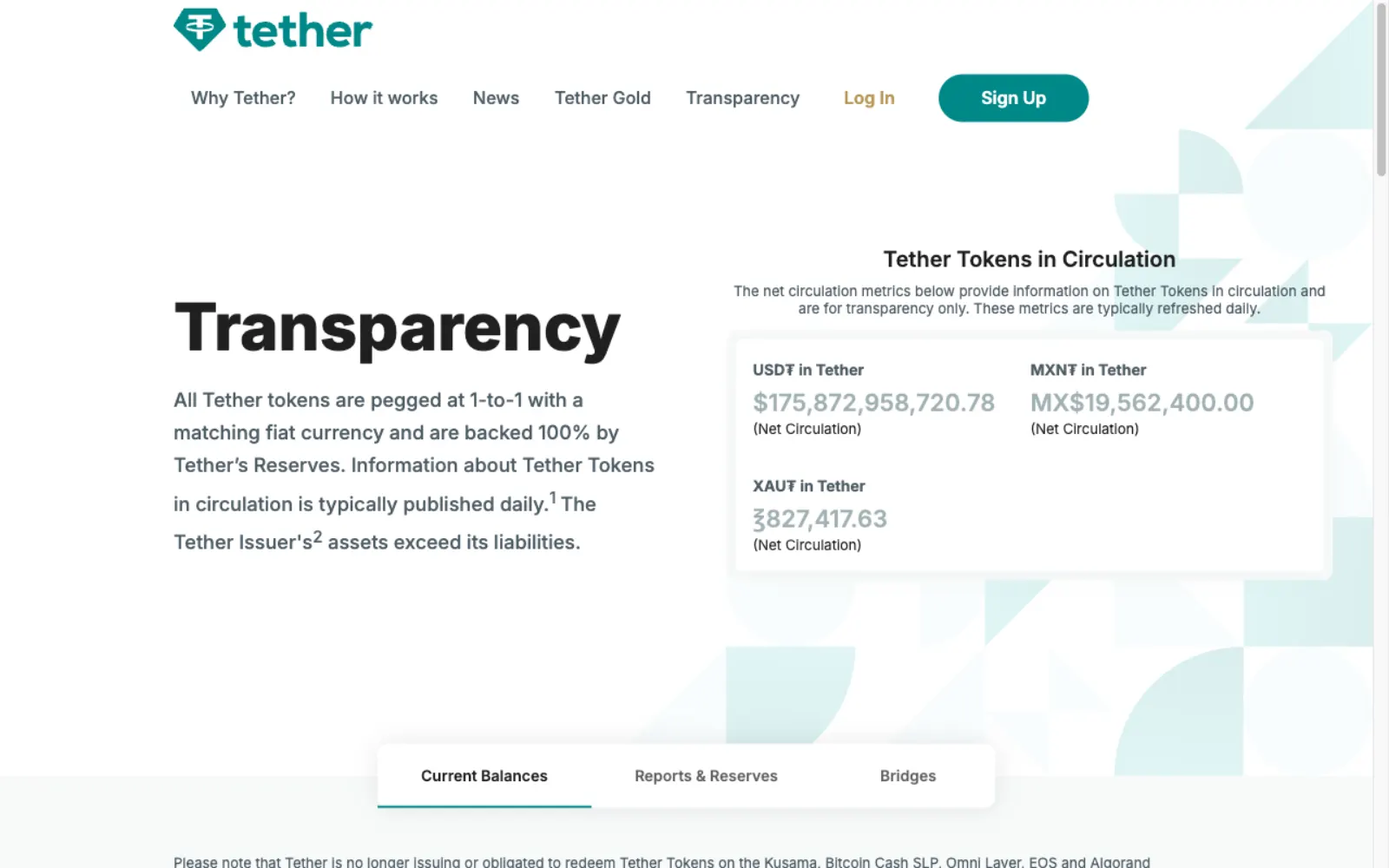
Tether says every USDT in circulation is 100% backed by its reserves, which include traditional currency, cash equivalents and other assets, including receivables from loans Tether has made to third parties. As long as the reserves are worth at least as much as all USDT in circulation, Tether calls it fully reserved.
To let outsiders check, Tether publishes reserve reports. According to its website, the quarterly reports are prepared by an independent accounting firm, BDO Italia. These are attestations, not full audits, and Tether also says it does not commit to updating the information at any particular interval.
The other mechanism behind the price is redemption: verified customers can hand USDT back to Tether for dollars. This is aimed mainly at institutions: registration requires identity review and a 150 USDT verification fee, and the review can take days to weeks. Ordinary users rarely redeem with Tether directly; they sell USDT to someone else on an exchange or P2P market.
Where USDT lives: one token, many blockchains
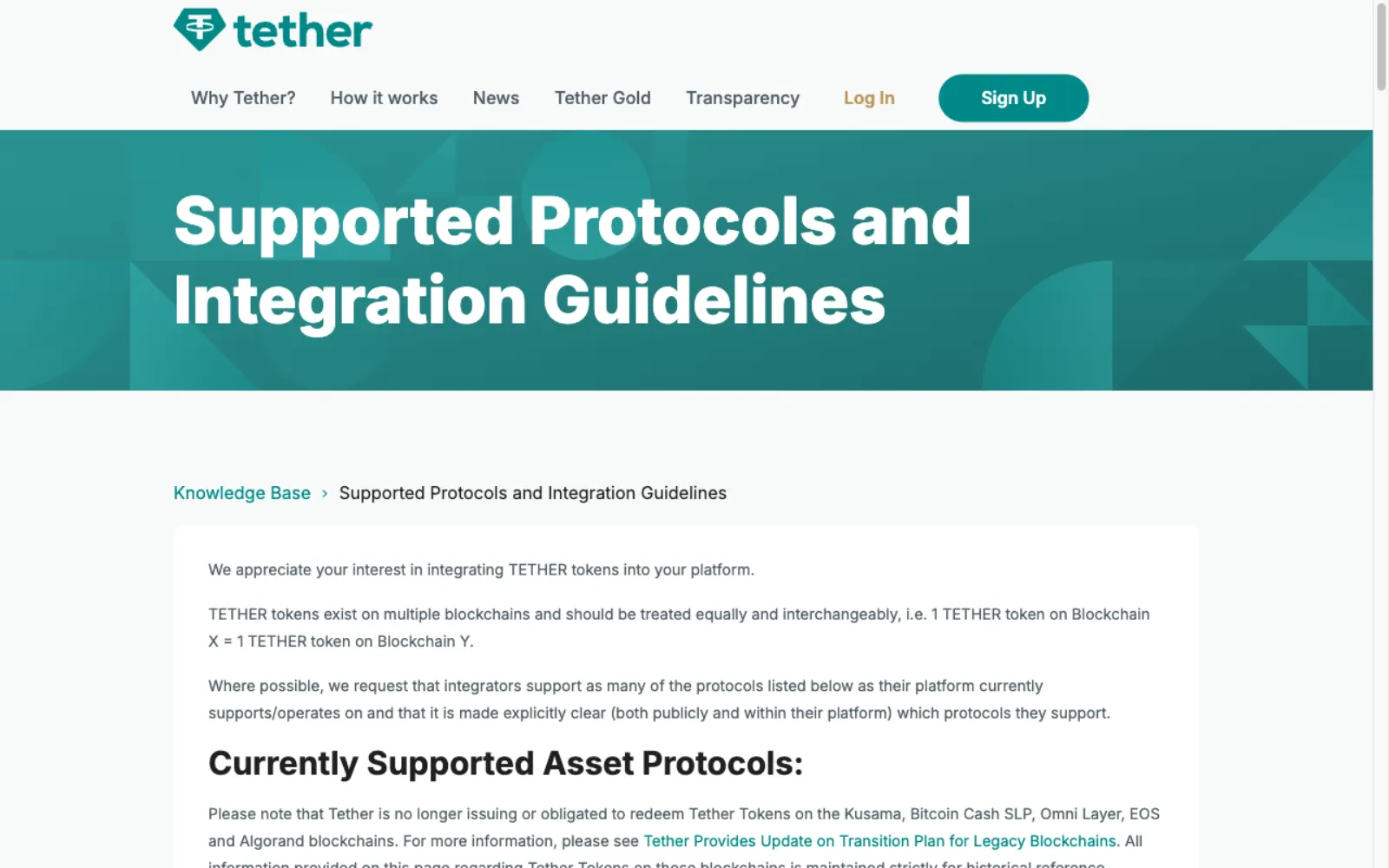
USDT does not live on a single blockchain. Tether's supported protocols page lists networks including Tron (TRC20), Ethereum (ERC20), Solana, TON, Avalanche, BNB Smart Chain, Polkadot, Aptos, Near and Tezos. USDT on Omni, EOS, Algorand, Kusama and Bitcoin Cash is no longer issued or redeemed.
USDT on different networks has the same value, but the networks do not talk to each other: USDT sent on Tron can only arrive at a Tron address. Choosing the wrong network can lose the money. This is the most common beginner mistake, and our guide to choosing a USDT payment network explains how to check.
The two you will see most are TRC20 and ERC20, accepted by almost every exchange and merchant that takes USDT. Fees depend on the network and the platform and do change: on 2026-11-11 Binance's USDT withdrawal fee was 0.01 on BEP20, 0.6 on ERC20 and 2 USDT on TRC20. Go by what the page shows when you send.
What people use USDT for
For many people the biggest use of USDT is simply getting dollars. Where currency controls are strict and the local currency loses value quickly, banks rarely sell dollars, and USDT fills the gap. It is also used to receive payments from clients abroad and to send money to family across borders.
You can spend USDT too, but not like a card. Most merchants do not accept USDT directly. The usual route is to buy gift cards, phone top-ups or game codes with USDT on platforms such as Bitrefill or Coinsbee, then redeem them. Which routes exist and who handles problems is covered in what you can buy with USDT.
- Holding dollar value while the local currency weakens
- Cross-border payments that arrive in minutes, outside bank hours
- Buying gift cards, phone top-ups and game codes
- Pricing other crypto trades on exchanges
Why USDT costs different amounts in different countries
If 1 USDT is about 1 dollar, buying it with local currency should cost about the local dollar exchange rate. In practice many P2P markets drift from that rate: in India, Argentina and Venezuela, 1 USDT often costs more than converting 1 dollar at the official rate, while in the Philippines and Indonesia the price usually matches the rate almost exactly.
That gap is the premium. It reflects how hard it is to get dollars locally: taxes, currency controls and banking risks all let sellers charge more. Offpar's home page updates USDT P2P prices in more than 30 countries every five minutes along with the premium over the dollar; why the premium exists and how to read it is in what the USDT premium means.
Risks a beginner should know
USDT is designed to be stable, but it is not a bank deposit and not legal tender. Think about these before you use it.
- Issuer risk: USDT's value depends on Tether's reserves and ability to pay. USDT has briefly traded below one dollar during market panics.
- Freezing: Tether states that in certain circumstances it may seize and destroy USDT remotely at the request of governments or law enforcement. Addresses linked to fraud or sanctions can be frozen.
- Transfers are final: a wrong address or network is almost impossible to undo.
- Platform risk: USDT held on an exchange is only as safe as the exchange.
- Local rules: some countries restrict or ban crypto trading, so check yours first.
What to do next
If you do not hold USDT yet, the most common way in is to buy it with local currency from an individual seller on an exchange's P2P market. For a first purchase, follow buying USDT on Binance P2P step by step: sign up and verify your identity, pick an ad, pay and receive the coins.
Before you buy, take a minute to check today's USDT price and premium for your country. Knowing the typical price makes it much harder to overpay.
Frequently asked questions
Is USDT the same as a US dollar?
No. USDT is a token issued by Tether and designed to track the dollar 1-to-1, but it is not legal tender and is not protected by bank deposit insurance. Its value depends on Tether's reserves.
Will USDT go up? Is it an investment?
USDT is designed to stay at one dollar, not to rise. Holding it will not grow in value the way bitcoin might; it works more like a digital dollar.
Are Tether, USDT and USD₮ the same thing?
Yes. Tether, USDT and USD₮ all refer to the dollar stablecoin issued by Tether.
Is USDT safe?
USDT is one of the most traded stablecoins, but it carries issuer risk, freezing risk and the risk of irreversible transfers. How safe it is also depends on where you keep it and how you send it.
Sources
This guide is based on the official pages and public material below, last checked on 2026-11-10. Platforms change their rules and products, so check the relevant page before you order.
- Tether: FAQsReviewed 2026-11-11
- Tether: Supported protocolsReviewed 2026-11-10
Ready to buy your first USDT?
Check today's USDT P2P price and premium for your country first so you know the going rate. If you have no exchange account yet, signing up and verifying takes about a quarter of an hour.
"Create a Binance account" is our referral link: if you sign up through it we may earn a commission, and your prices and fees stay the same. How we handle referral links