
On exchanges USDT and USDC sit side by side, both priced around one dollar. Beginners ask: are they the same, and which should I buy?
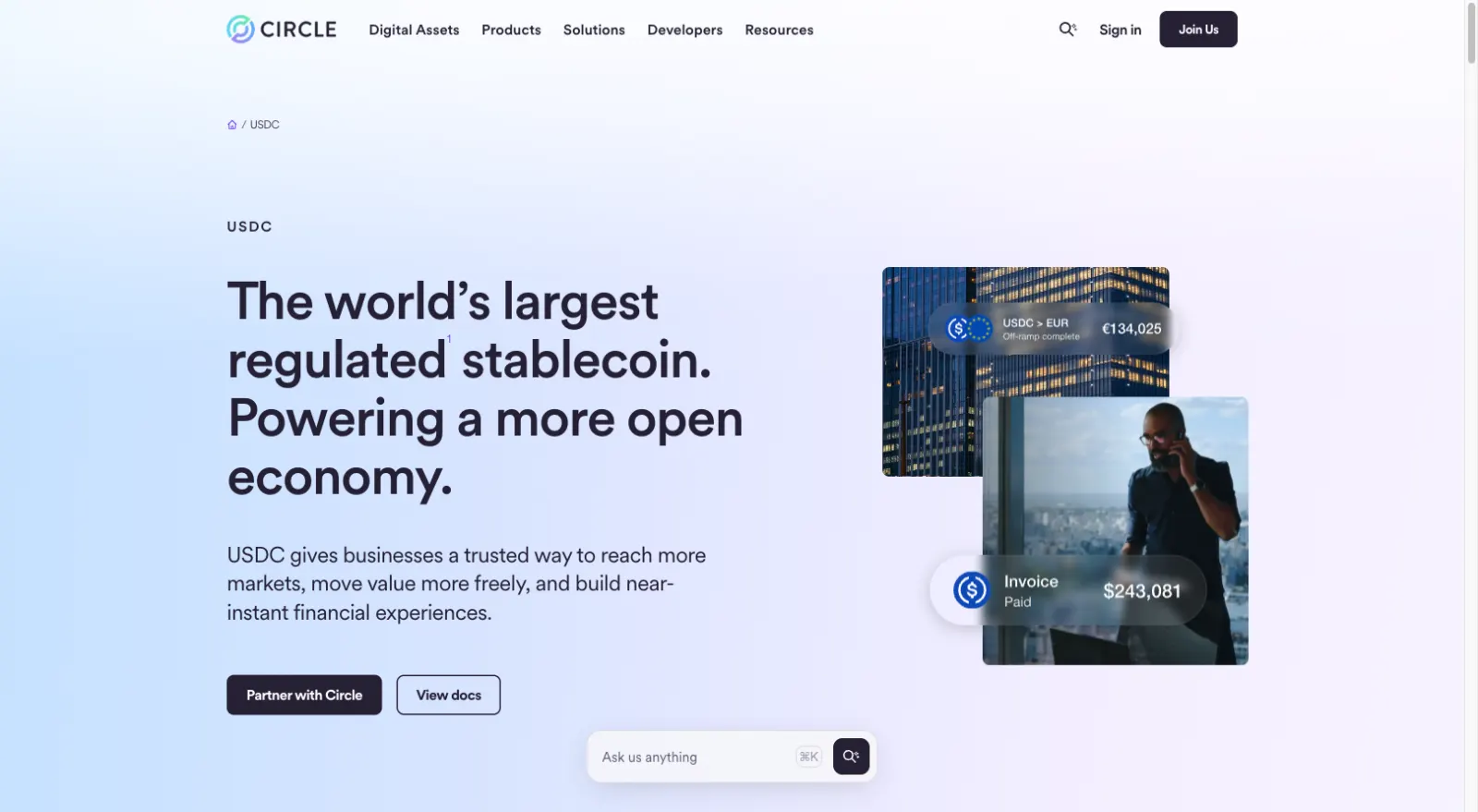
In short, both are stablecoins pegged 1:1 to the dollar with similar uses, but their issuers, reserve make-up, regulatory standing and liquidity on local P2P markets differ. Below we compare them item by item from each issuer's own published material.
Key points
- USDT is issued by Tether and USDC by Circle; both aim for one token per dollar
- USDC's reserves sit mostly in a BlackRock-managed government money market fund and bank cash
- Circle publishes monthly reserve attestations from a Big Four accounting firm
- USDT is much larger and far more liquid on emerging-market P2P
- Which to use depends mainly on who you pay and which market you trade in
The differences in one table
Figures come from Tether's and Circle's public pages in November 2026. Circulation changes daily; it is here only for scale.
| USDT | USDC | |
|---|---|---|
| Issuer | Tether | Regulated affiliates of Circle |
| Reserves (as stated) | Traditional currency, cash equivalents and other assets including loans to third parties; also holds bitcoin and gold | Highly liquid cash and cash equivalents, mostly in the Circle Reserve Fund (managed by BlackRock, custodied at BNY Mellon) |
| Reserve reports | Quarterly attestations by BDO Italia | Monthly attestations by a Big Four firm; reserves disclosed weekly |
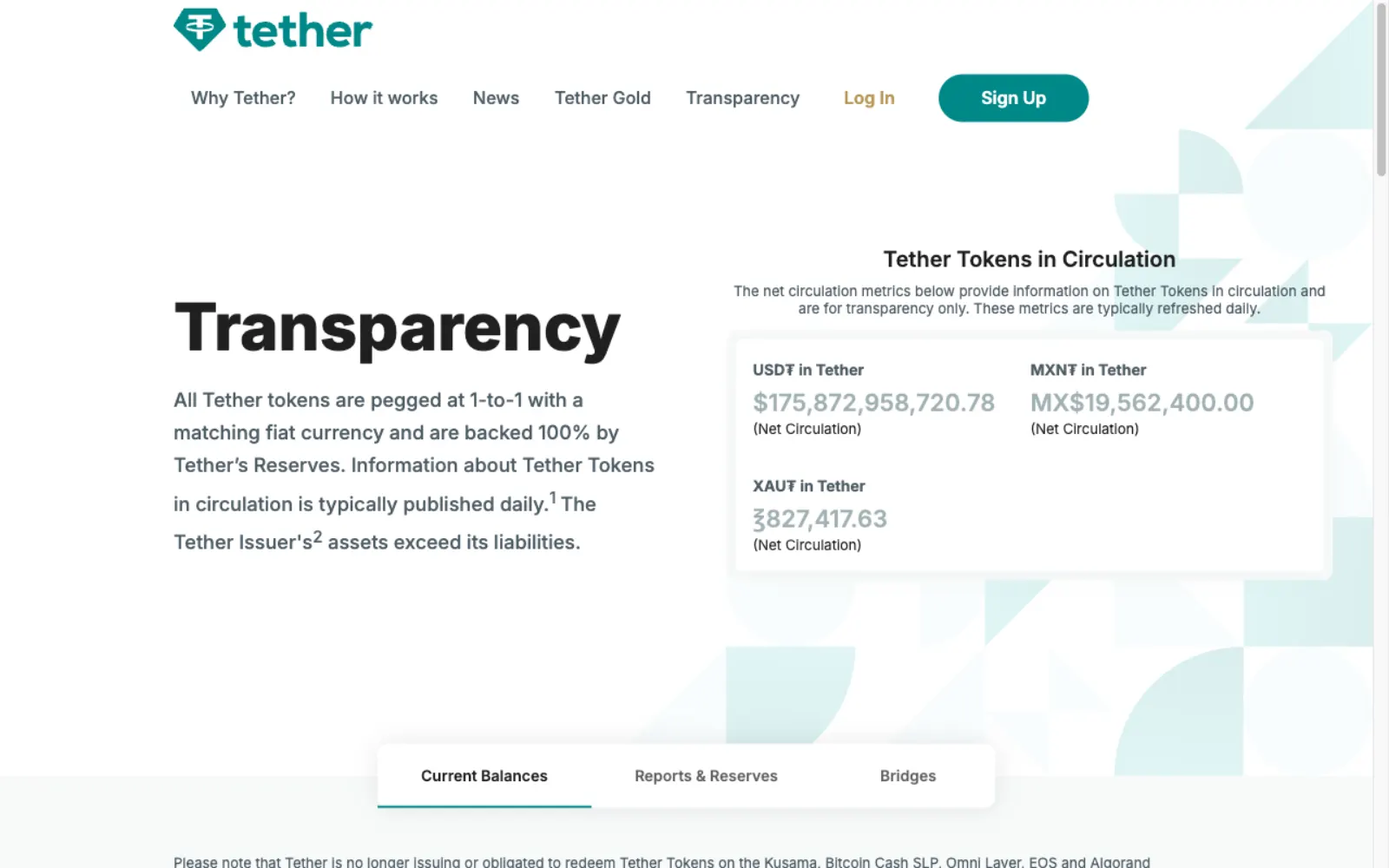
| Circulation | About $175.9B (Tether transparency page, 2026-11-11) | About $68.9B (Circle, 2026-11-09) |
| Blockchains | A dozen or so, including Tron, Ethereum, Solana and TON | Circle says natively supported on 38 |
| Emerging-market P2P liquidity | Very high; most local-currency ads are in USDT | Lower; far fewer ads |
Reserves: the two hold different things
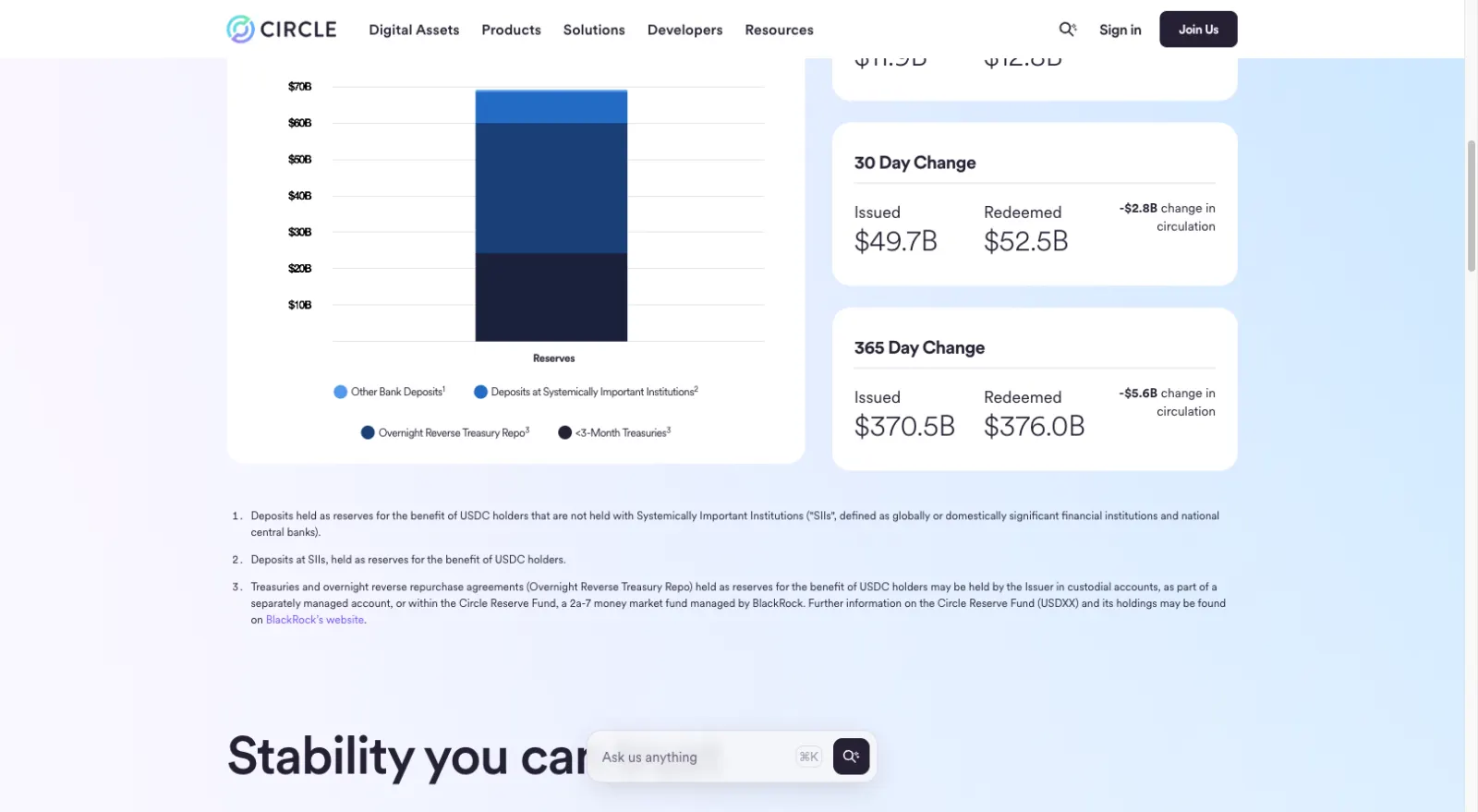
Circle says USDC is backed 100% by highly liquid cash and cash-equivalent assets and redeemable 1:1 for dollars. Most of the reserve is in the Circle Reserve Fund (USDXX), an SEC-registered government money market fund managed by BlackRock and custodied at BNY Mellon, holding short-dated Treasuries and overnight Treasury repo; the rest is cash at a handful of large banks.
Tether says every USDT is 100% backed by reserves including traditional currency, cash equivalents and other assets, among them loans to third parties, and that it holds bitcoin and gold as a hedge. Both claim full reserves, but USDC's are more concentrated in cash-like assets.
Regulation and transparency
Circle lists its licences publicly: for example an electronic money institution licence in France, a MiCA crypto-asset service provider authorisation granted in April 2026, and a US national trust charter from the OCC, operating as Circle National Trust. It publishes monthly reserve attestations and weekly reserve holdings.
Tether updates circulation daily and publishes quarterly attestations by BDO Italia, while saying it does not commit to updating information at fixed intervals. In the European Economic Area some platforms restrict unauthorised stablecoins under MiCA, and Binance's help pages carry such notices, so EEA users face some limits on USDT.
Where the two came from
USDT launched in 2014 and is the oldest and largest dollar stablecoin, long the unit exchanges price other crypto in and dominant in emerging-market P2P trading.
USDC launched in 2018, issued by Circle and aimed more at regulated payments and financial institutions; Circle also issues the euro stablecoin EURC. Both are on most exchanges, but how widely each is accepted varies a lot by setting.
On P2P markets the gap is stark
Buy or sell stablecoins for local currency in India, Nigeria, Argentina or the Philippines and you will see P2P ads are almost all USDT. USDC trades too, but with fewer ads and potentially wider gaps. The prices Offpar tracks in more than 30 countries are all USDT prices.
That is why USDT is the de facto digital dollar in emerging markets: more buyers, more sellers and easier conversion back to local currency.
Which should you use?
There is no single answer; decide by purpose.
If you simply want a digital dollar in your own country and will convert back later, USDT is usually the less hassle.
- Buying and selling for local currency on P2P: USDT, by far the more liquid.
- Paying a merchant or person: use whichever they accept; do not swap on their behalf.
- If reserve transparency and regulation matter most: USDC's reserves and reporting are more transparent.
- In the EEA: check platforms' USDT restrictions first; USDC or a euro stablecoin may be easier.
- You can swap between them on exchanges, with a small spread or fee each time.
Frequently asked questions
Is USDT or USDC safer?
Both claim 100% reserves. USDC's are concentrated in cash and short Treasuries with monthly Big Four attestations; USDT's are more varied with quarterly reports. Safety also depends on where you keep it and how you send it.
Can I swap USDT for USDC directly?
Yes, on exchanges such as Binance, at close to 1:1 with a small spread or fee. They are different tokens even on the same network, so never send USDT to an address that only accepts USDC.
Why is P2P almost all USDT?
USDT came first, is larger and has a bigger user base in emerging markets. Buyers and sellers concentrate on it, so liquidity is deeper and prices more competitive.
Can I buy USDC on P2P?
Yes, USDC is in Binance P2P's coin list, but in most emerging markets it has far fewer local-currency ads than USDT and possibly wider gaps. A common approach is to buy USDT on P2P and swap to USDC on the exchange.
Can USDT or USDC lose the peg?
Both are designed to hold 1:1 with the dollar, but both have briefly drifted from one dollar during market stress. A stablecoin's value depends on its issuer's reserves and ability to pay; it is not a bank deposit and has no deposit insurance.
Sources
This guide is based on the official pages and public material below, last checked on 2026-11-11. Platforms change their rules and products, so check the relevant page before you order.
- Circle: USDCReviewed 2026-11-11
- Circle: Transparency and reservesReviewed 2026-11-11
- Circle: Licenses and registrationsReviewed 2026-11-11
- Tether: TransparencyReviewed 2026-11-11
- Tether: FAQsReviewed 2026-11-11
Ready to buy your first USDT?
Check today's USDT P2P price and premium for your country first so you know the going rate. If you have no exchange account yet, signing up and verifying takes about a quarter of an hour.
"Create a Binance account" is our referral link: if you sign up through it we may earn a commission, and your prices and fees stay the same. How we handle referral links