
After you buy USDT on P2P, it first shows up in your exchange account. The next question is whether to leave it there or move it to your own wallet. Neither is right for everyone; it depends on what you want to do with the USDT and how much responsibility for keeping it safe you want to take on.
This guide explains the difference as plainly as possible and suggests the safest approach for beginners.
Key points
- Exchange account: the platform holds it for you; convenient, but only as safe as the platform
- Own wallet: you hold the private key or seed phrase, and if you lose it nobody can recover it
- Sending USDT from a wallet needs the network's own coin for fees, such as TRX on Tron
- Beginners can start on an exchange and move to a wallet once comfortable
- Either way, never share your seed phrase or password with anyone
The two ways to hold USDT
Keeping it in an exchange account is custody: the exchange holds your USDT and your balance is a record on its ledger. It is convenient, since buying, selling, transfers and P2P happen in one place, and a forgotten password can be recovered through identity checks. The risk is that safety depends on the exchange, and accounts can be restricted for compliance reasons.
Keeping it in your own wallet is self-custody: the USDT sits on the blockchain at an address only your private key controls. You are fully in control and depend on no platform, but if the private key or seed phrase is lost or leaked, nobody can get it back.
| Exchange account | Your own wallet | |
|---|---|---|
| Who holds it | The exchange | You (private key or seed phrase) |
| Forgotten password | Recoverable through verification | Lose the seed phrase and it is gone |
| Trading and P2P | Available directly | Send back to an exchange first |
| Transfer fees | Charged by the exchange on withdrawal | Paid in the network's own coin |
| Main risk | Platform risk, account restrictions | Losing it yourself, phishing |
What a seed phrase is and why it matters
When you create a wallet, the app gives you 12 or 24 English words: the seed phrase. It is the key to everything in the wallet. Anyone with those words can restore your wallet on any device and move the funds.
So keep it offline only, for example written on paper somewhere safe. No screenshots, no cloud drives, no chat messages, and never send it to anyone. Real wallet support will never ask for your seed phrase.
Why a wallet with only USDT cannot send it
This catches most new wallet users. Sending on a blockchain requires a fee paid in that network's own coin: TRX on Tron, ETH on Ethereum. With only USDT and none of the native coin, the transfer will not go through.
If you plan to send and receive TRC20 USDT from your own wallet, keep a little TRX in it too; for ERC20 USDT keep a little ETH. How much depends on the estimated fee your wallet shows on the confirmation screen.
Moving from an exchange to a wallet: pick the right network
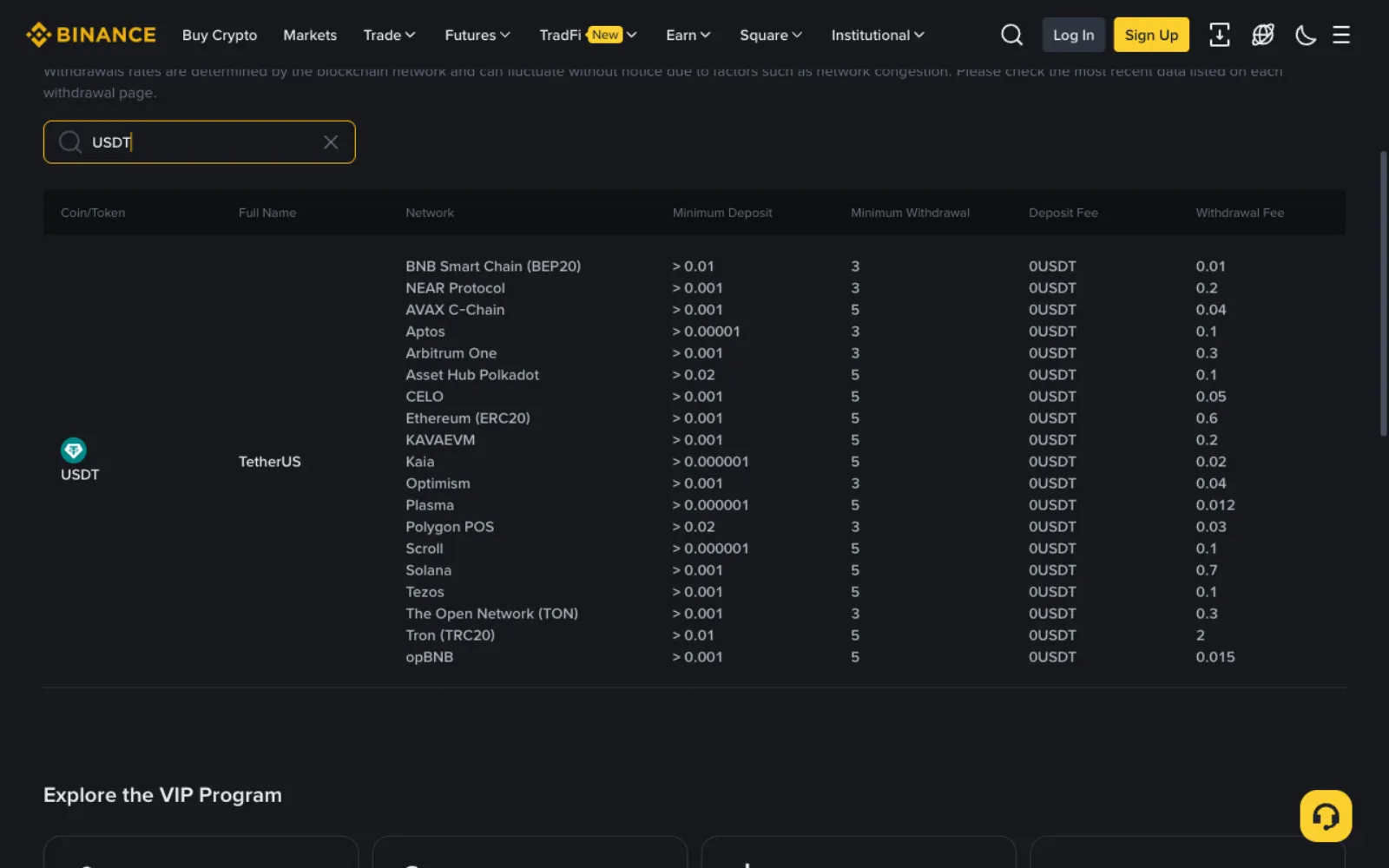
When you withdraw from an exchange to a wallet you choose a network. Tether lists USDT on several networks, including Tron, Ethereum, Solana and TON, and they do not interoperate. Withdraw on the network your wallet address belongs to.
For the first transfer, send a small test amount and send the rest once it arrives. One extra fee is cheap insurance against sending everything to the wrong place.
The safest approach for beginners
If you bought USDT to spend soon, or to sell back to local currency later, an exchange account is usually enough, provided you enable two-factor authentication, use a strong password and avoid unknown links.
If you plan to hold larger amounts for a long time, or pay many different people in USDT, move to your own wallet once you are comfortable, and store the seed phrase offline. Either way, do not keep everything in one place.
One last point: USDT itself carries issuer risk. Tether states that at the request of governments or law enforcement it may seize and destroy USDT at specific addresses. Wherever you keep it, do not use USDT for transactions of unknown origin.
The most common way people lose USDT: phishing
Whether USDT sits on an exchange or in a wallet, most losses are not hackers breaking systems but users typing passwords into fake sites or handing seed phrases to scammers. Phishing sites often differ from the real address by a letter or two and look nearly identical.
A few habits stop most phishing: bookmark the exchange and only enter through the bookmark; never use login links from texts, emails or chats; read wallet approval requests carefully and reject what you do not understand; anyone asking for your seed phrase to "verify your wallet", "claim an airdrop" or "unfreeze your account" is a scammer.
A subtler trick is address poisoning: scammers send you a tiny amount from an address whose first and last characters match one you use, so it appears in your history and you copy it by mistake next time. Check the full address before sending, not just the ends.
Frequently asked questions
Is it safe to keep USDT on an exchange?
It depends on the exchange's own security and compliance, and on how well you protect your account. Two-factor authentication, a unique password and wariness of phishing links greatly reduce the risk of theft.
Which wallet should I use?
One downloaded from official channels, supporting the network you need (such as Tron or Ethereum), with a long and stable track record. Whatever the wallet, how you keep the seed phrase matters just as much.
Can I recover USDT sent on the wrong network?
Usually it is hard. Some exchanges offer paid recovery for deposits on the wrong network, with no guarantee. Check the network and send a small test first.
Can I use an exchange and a wallet at the same time?
Yes, and many people do: money you will use soon stays on the exchange for trading, and long-term savings go in your own wallet. Pick the right network when moving between them.
If I lose my phone, do I lose the USDT in my wallet?
Not if you still have the seed phrase: you can restore the wallet on a new phone. If the phone is lost and the seed phrase was never backed up, the funds cannot be recovered.
Sources
This guide is based on the official pages and public material below, last checked on 2026-11-10. Platforms change their rules and products, so check the relevant page before you order.
- Tether: Supported protocolsReviewed 2026-11-10
- Tether: FAQsReviewed 2026-11-11
Ready to buy your first USDT?
Check today's USDT P2P price and premium for your country first so you know the going rate. If you have no exchange account yet, signing up and verifying takes about a quarter of an hour.
"Create a Binance account" is our referral link: if you sign up through it we may earn a commission, and your prices and fees stay the same. How we handle referral links